Good field season in Kvismaren
This year, the regular studies of the Bird Observatory have continued as usual. The number of breeding Western Marsh Harriers was somewhat lower than in recent years – a total of 15 breeding attempts, with all nests but one located in the large reed bed at Kvinnerstasjön. Happily, almost all the nests could be accessed, and 29 chicks were ringed with colour rings. The reed bed was so dense in places that there were probably one or two additional nests we missed. In a couple of years, we hope to receive reports on where the birds turn up – the aim is to learn more about the species' dispersal and return patterns.
The Great Egret is breeding in Kvismaren for the second year in a row, with at least five pairs, two or three of which succeeded in raising young. Unlike last year, the pairs started at very different times, which meant that when we visited to ring the chicks, they were either too big or too small – only one chick was ringed this year. The Sedge Warbler continues to increase, and this year we counted at least 20 singing males.
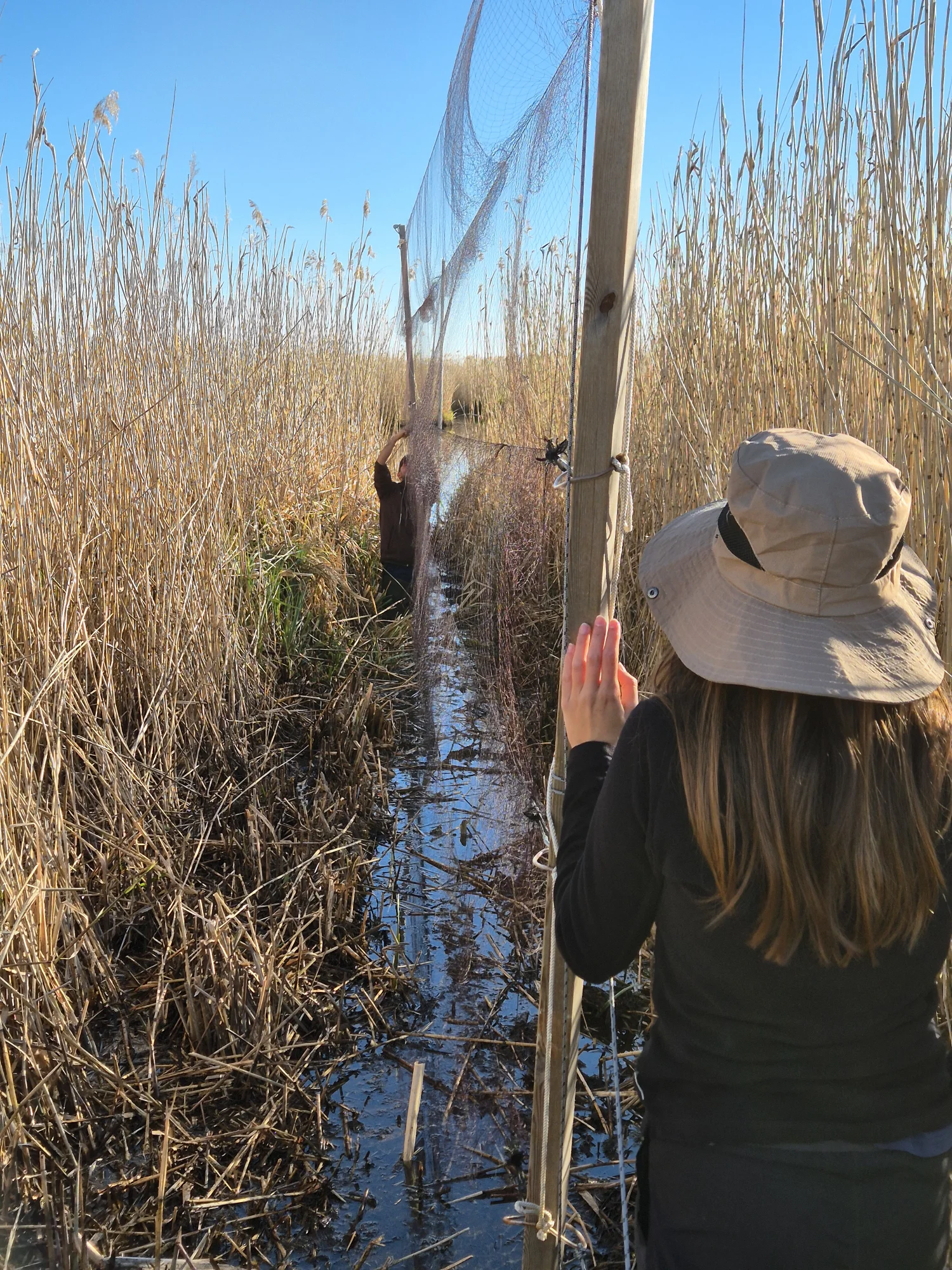
Ringing has gone excellently so far, and it's especially pleasing that we've been able to ring birds at Ässön on a larger scale than in previous years. By mid-August, a total of 4,400 birds had been ringed, slightly more than last year, which was already one of the best seasons in years. The Reed Warbler tops the ringing records, and among the more unusual birds ringed are two Eurasian Bitterns, a Green Woodpecker, a Blyth's Reed Warbler, and a Common Rosefinch.